
Lordping Casino Games and Software: How to Judge the Library Before You Play
See also:
- What Can You Confirm About lordping casino’s Game Library at a Glance?
- Reading the Lobby: Slots, Roulette and Live Dealer Tables
- Identifying the Software Providers Behind the Games
- Fairness Signals: RNG Testing, RTP Figures and Certificates
- A Short Checklist Before You Commit to a Game
- Common Questions About Lordping Casino’s Games
- Playing Within Your Limits
What Can You Confirm About lordping casino’s Game Library at a Glance?
Catalogue depth varies significantly between operators, affecting long-term engagement. Reviewing specific title counts and provider partnerships clarifies which library offers the genuine variety you expect.
| Brand | Details |
|---|---|
| lordping casino | Lord Ping Casino covers live dealer tables, slots and roulette. |
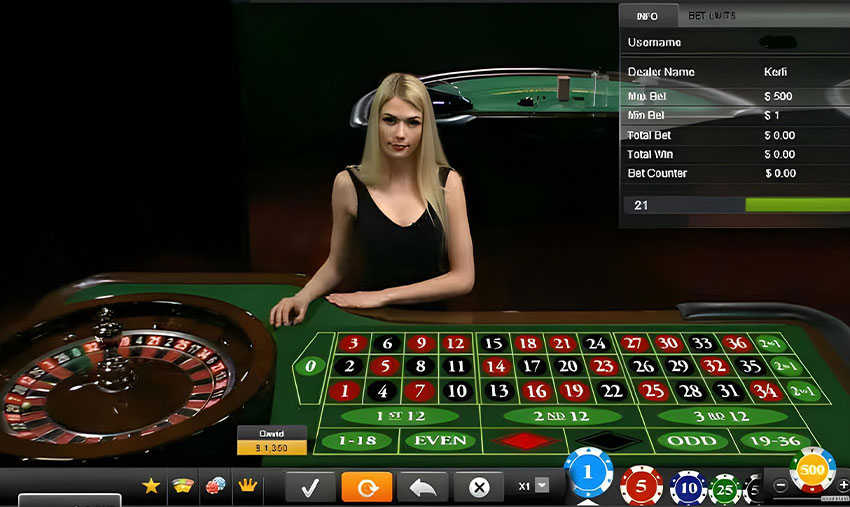
If you want a dealer on screen, Lord Ping Casino includes live casino games. If you want to play alone at speed, slots are there. Roulette sits between the two: fixed rules, no dealer, but a table you can read before you bet. Decide which of those three moods you are in, and the catalogue stops feeling like a wall of options.
Reading the Lobby: Slots, Roulette and Live Dealer Tables
What the Lobby Structure Tells You Before You Deposit
A well-organised lobby tells you where to look, not what you will find. That distinction matters at Lordping Casino: category labels such as slots, roulette or live dealer are a map of the menu, not a stock guarantee. A tile can survive a provider change or a regional restriction while the games behind it thin out. The reliable move is to open the category and inspect the grid itself rather than trusting the label.
Slots usually dominate a casino lobby because they are the easiest to publish in volume, and the shelf can run into hundreds of titles. Roulette is different: the table section tends to be compact, so the useful signal is whether the variants are genuinely distinct or the same wheel repeated under new names. Live dealer tables sit in their own lobby area, and the presence of that tab means a separate studio feed with a presenter, not a software simulation. Watch for filter controls, search fields and provider tags inside each category. If a category has no filter and no search, browsing a large shelf becomes slow on a phone, and the practical cost is time spent scrolling instead of playing.
Slots, Roulette and Live Tables Are Not One Shelf
The three categories behave differently enough that one browsing habit will not serve all of them. Slot shelves are curated by theme, volatility label or provider, so sorting by what the lobby exposes is faster than scanning alphabetically. Roulette needs the variant name checked before play, because European, American and other wheel layouts carry different house edges. Live dealer tables run on a schedule, so a table shown in the lobby may be closed until its next session; a thumbnail is not availability.
On a mobile screen the difference is sharper. Categories that collapse into a single scrolling column hide the search box below the first rows of tiles, and the filter controls may sit behind an icon. Testing the navigation before depositing is a reasonable check: open each category, run one search, clear it, and see whether the lobby returns you to the same place. If it does not, the library exists but the route to it is clumsy.
all british casino sister sites
Identifying the Software Providers Behind the Games
Where provider information appears in the lobby and game screens
A recognisable studio name is a starting point for judging a game, not a verdict on the whole library. The name tells you who developed that title; it does not confirm that lordping casino holds a current licence for it, that the payout settings match the studio’s default, or that the catalogue is complete. Treat it as one data point.
Provider names surface in a few places. Game tiles in a lobby often carry a small studio logo or name, and filtering or sorting by provider will group titles by studio where the site supports it. Opening an individual game usually reveals more: an information screen, a help panel or a rules page that credits the developer and sometimes lists the build version. The site footer is the other useful spot, because studios whose games are integrated into the platform are frequently acknowledged there alongside other third-party suppliers. Read these together rather than relying on any single one. A logo on a tile is marketing placement; a credit on a game’s info screen is closer to the actual source.
What a familiar studio name does and does not tell you
Recognition is a shortcut with a short reach. If you know a studio’s house style, its name helps you predict volatility, presentation and the kind of mechanics to expect. That is genuine information.
What it cannot do is stand in for checking the game itself. The same studio can produce titles with different characteristics, and RTP or rule variants can differ between versions of a game. The provider name also says nothing about whether a particular table or slot is live on lordping casino today; titles are retired and added over time. Use the studio label to narrow your shortlist and open the game’s own information screen to confirm the specifics you care about. If the provider field is blank or a game carries no visible credit, note that gap rather than filling it with an assumption.
Fairness Signals: RNG Testing, RTP Figures and Certificates
What RNG certification actually covers
A testing-lab certificate for a random number generator is evidence about a mechanism, not a promise about your session. Independent auditors examine whether the software’s output passes statistical tests for randomness, whether the generator is seeded and driven as described, and whether the games built on it draw results from that generator. The certificate describes what was tested, at which version and on what date. It cannot tell you that the games you load today use that exact build, that returns will cluster around any figure in the short term, or that an operator applies the software honestly. Certificates are a signal that someone outside the operator has looked at the code path; they are not a guarantee of your results.
Reading an RTP figure without over-reading it
Return-to-player is a long-run average: the share of total stakes returned across a very large number of plays. A slot published at a given RTP has a house edge of whatever remains, and that edge is what the operator retains across the whole cycle. The number matters because two versions of the same game can carry different configured RTPs, and some providers let operators choose a setting within a permitted band. A published figure only becomes useful when you know which configuration is live on the game you are about to play. Without that detail, you know the provider’s permitted range at best, not the figure attached to your session.
The figure also says nothing about volatility. A game with a high average return can still produce long losing stretches, and a low-volatility game can drain a balance gradually. Treat RTP as a property of the game’s design over time, and check whether the paytable or information screen inside the game states the version in use. Where that information is absent, you cannot confirm which configuration you have loaded, and the figure you saw elsewhere may not describe it.
tote casino overview: access, payments, safety checks and bonus terms
No certificate can make RTP describe a single session’s outcome. The discipline is to read the signals as exactly what they are: a test of the generator and a stated long-run average, both worth knowing and both silent about what happens in the next hour.
A Short Checklist Before You Commit to a Game
- Find the game’s information panel before you spin or deal. In most lobbies it opens from the tile itself or from a small info icon, and it typically lists the title, the provider, the theoretical return figure and, for slots, the paytable. The paytable is the part that repays reading: it shows how many symbols pay, whether there are wilds or scatters, and whether a bonus round changes the stake you are playing. A game whose base game suits your budget but whose feature buys or side bets cost extra needs that fact factored in before you start.
- Check the actual stake options rather than the default. Slots usually let you change coin size or total bet per spin, and table games let you pick chip values. Confirm the lowest and highest stakes the game accepts, because a title that opens at a higher minimum than you expected will burn through a session faster than the paytable suggests. That number is shown in the game itself, not in the lobby thumbnail.
- Look at the settings you can change in the account or game menu. Sound, animation speed, autoplay and, where offered, loss or session limits are separate from the game’s maths; they affect how long you stay and how quickly you notice spending. A game that supports a loss limit you have set in the account is easier to play within budget than one that does not, though the limit itself is a control you apply, not a guarantee of a different outcome.
- Read the return figure as a long-run average, not a prediction for your session. A high theoretical return still leaves room for losing runs, and a lower one does not mean a game cannot pay. Judge it alongside volatility if the panel shows it, and treat both as descriptions of the game’s behaviour over many plays rather than a forecast of the next few.
- Decide what would make a game unsuitable before you commit. If the paytable is hard to find, the stake range is unclear, or the provider is not identifiable in the info panel, that is a reason to pause rather than proceed. The checklist is a filter for your own expectations: stake fits, rules understood, provider known, controls available. If one of those is missing, the game is not ready for your money yet.
Common Questions About Lordping Casino’s Games
What should you do if a game freezes or disconnects mid-round at Lordping Casino?
Reopen the lobby and return to the game rather than starting a fresh session on another device. Whether an interrupted round resumes depends on the game’s server-side state; many titles recover the spin, others settle it automatically. Check your balance and game history to see which outcome applied.
Why might a slot or table game you played before no longer appear in the Lordping Casino lobby?
Libraries change. Studios withdraw or update titles, and a provider can end its distribution agreement, so a game listed last month may vanish without any account action. Search the title directly by name; if it returns nothing, treat it as unavailable rather than as a fault on your side.
Does seeing a well-known provider’s logo prove that every game on the site is fair and independently tested?
No. A studio label identifies who built that title. It says nothing about certification for the site’s other games or its own verification. Judge each game by its information screen, where testing references and published return figures sit, if the title displays them.
Playing Within Your Limits
Playing within your limits matters more than any library feature, and the hard boundaries are simple. You must be 18 or over to gamble in the UK. The Gambling Commission regulates lordping casino and the wider market, and GAMSTOP lets you self-exclude from UK-licensed sites in one registration. If play stops feeling like entertainment, GamCare and BeGambleAware provide support, and the National Gambling Helpline is on 0808 8020 133. Use whatever deposit limit the site offers to fix your spending before you start, and treat a loss limit as a ceiling, not a target. Chasing losses is the one rule with no exceptions.